Leadership, mentorship, and engineering discipline for Arctic safety technology
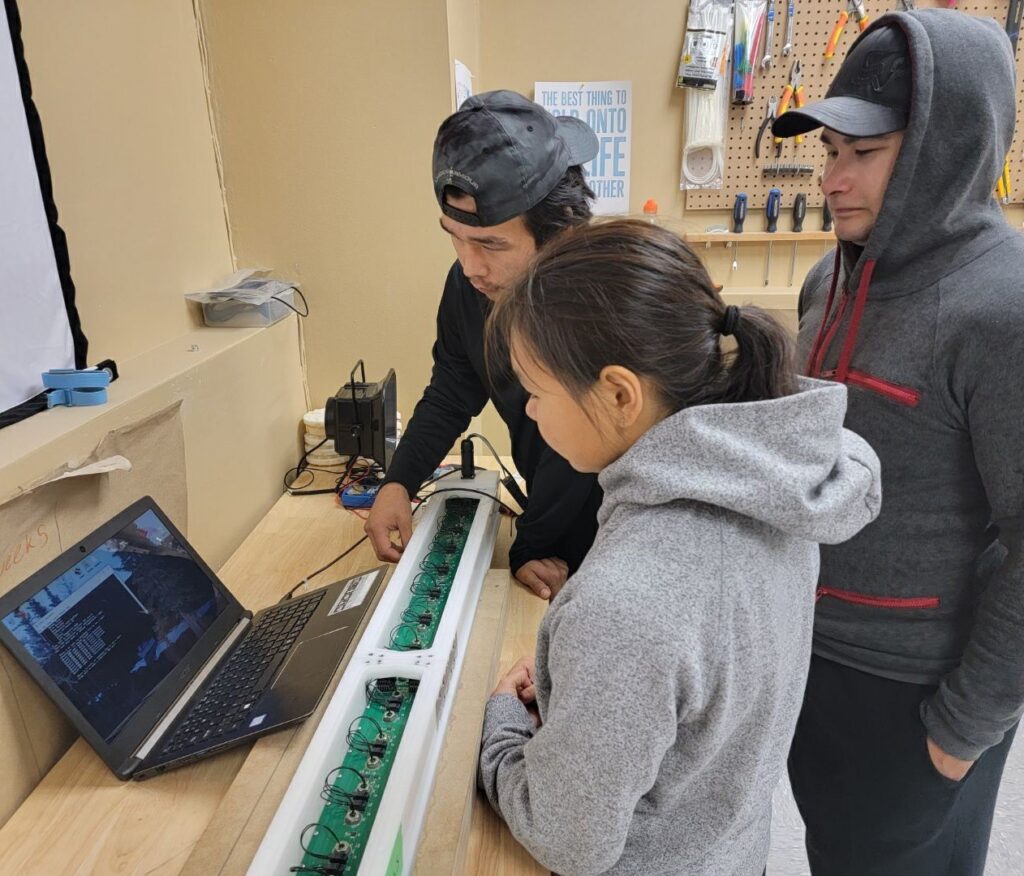
SmartICE is a Newfoundland and Labrador–based social enterprise dedicated to improving ice safety for northern and Indigenous communities through real-time environmental monitoring. Its SmartBUOY platform delivers actionable ice thickness measurements derived from temperature data in some of the most demanding environments on the planet.
The challenge
SmartICE had a technically capable, early-career engineering team and a proven mission—but it was developing safety-critical hardware under harsh Arctic constraints, tight seasonal deployment windows, and the accumulated “technical debt” typical of early prototypes. The SmartBUOY (v4) met functional objectives, but remained costly to produce, complex to assemble, heavy in the field, and vulnerable to leakage and damage. The organization needed stronger delivery cadence, clearer decision discipline, and more consistent risk management—without outsourcing ownership of the product or the team’s growth.
Design Smith’s role
Design Smith supported SmartICE as a long-term, on-demand advisor across training, technical facilitation, and leadership mentoring. The goal was not to take over engineering decisions, but to strengthen the team’s capability to frame problems well, manage trade-offs, and deliver under schedule pressure—while maintaining full technical ownership inside SmartICE.
“Andrew has been an integral part of SmartICE’s technical evolution. He consistently aligned with our mission while strengthening the team’s ability to make disciplined technical decisions and manage risk in a demanding environment. His guidance helped our engineers develop confidence, self-reliance, and strong cross-disciplinary practice. As we prepare for the release of SmartBUOY Version 5, with the first prototype now deployed, his impact is evident in both the product and the organization that built it.” – Carolann Harding, CEO, SmartICE
Training and capability development
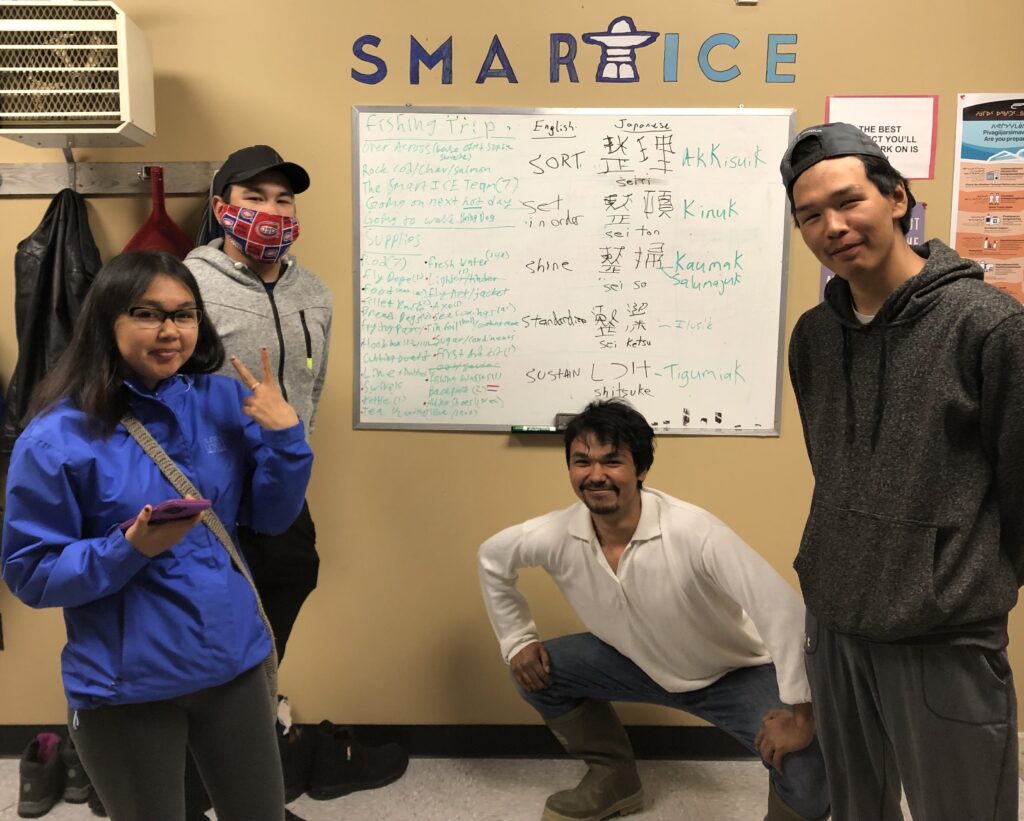
The engagement began in 2019 with Lean training delivered through the CME program, supporting SmartICE staff in St. John’s and workforce development and youth outreach in Nain, Labrador. The objective was practical capability-building grounded in SmartICE’s operating reality, not abstract process education. Sessions combined concise instruction with discussion, workshopping, and participant-led discovery to ensure concepts were internalized and applied.
In Nain, key concepts were translated into Inuttitut by participants and reframed using locally meaningful examples—strengthening comprehension while respecting community knowledge and context.
Training focus areas included:
- Flow and waste identification
- Forensic failure resolution
- Workcell design and layout
- Equipment standardization
- Visual management and error prevention
Product evolution
As the relationship matured, SmartICE engaged Design Smith to support the evolution of its core technology. The redesign began with focused working sessions to review specifications, the bill of materials, and physical constraints, and to establish clear performance and manufacturing targets.
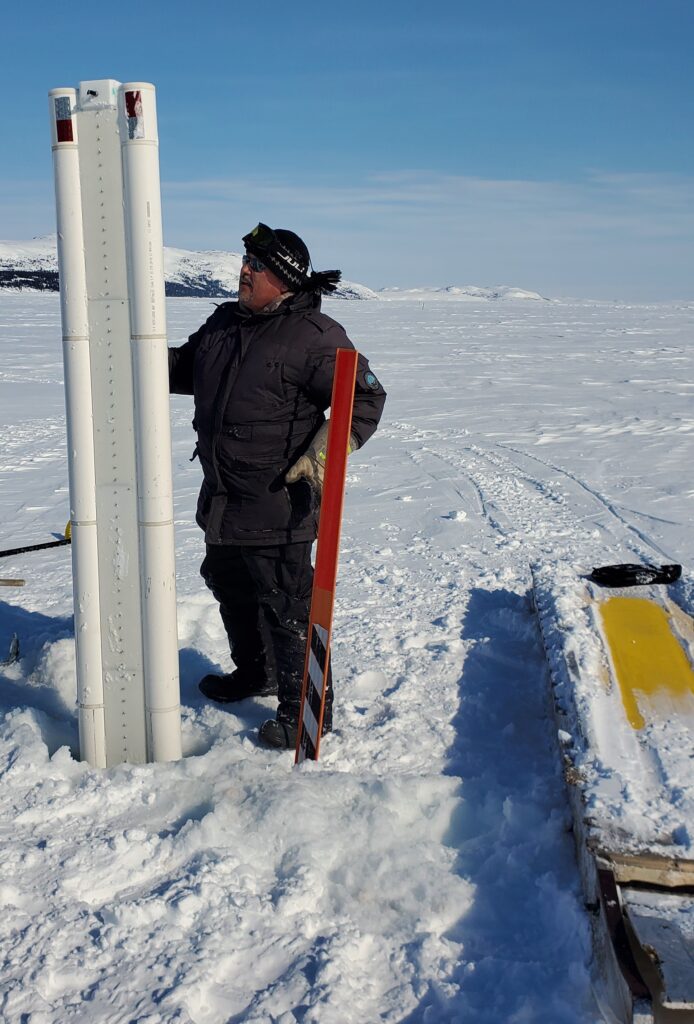
Primary redesign targets included:
- Elimination of leakage risk
- System mass and handling weight
- Part count and assembly complexity
- Shipping volume and logistics footprint
- Deployment geometry and ice borehole diameter
- Total manufacturing and lifecycle cost
While the team initially questioned whether major reductions were achievable without compromising reliability, conservative objectives and stretch targets were defined to challenge embedded assumptions. Several stretch targets have since been exceeded, with final figures pending completion of field validation.
Engineering practice and delivery discipline
Design Smith’s contribution in this phase was to impose structure, cadence, and decision discipline rather than provide technical answers. With the Arctic ice season establishing a non-negotiable delivery horizon, the team was guided through structured problem framing to consolidate a wide range of symptoms into a small number of system-level concerns.
Primary system-level failure modes included:
- Sealing integrity and leakage risk
- Measurement reliability and repeatability
- Remote diagnostics and serviceability
Design sessions were run as facilitated working reviews. Assumptions were challenged, problem statements were reframed, relevant industry methods were introduced where helpful, and analytical clarity was enforced—while technical ownership remained with the SmartICE engineering team. Work progressed through focused design sprints and cross-disciplinary design reviews with a consistent standard: design decisions had to be defensible to a technically literate, non-specialist audience before being considered complete.
Human interface and field constraints
Human interface design was treated as a primary design input, driven by Arctic operational reality rather than laboratory assumptions. Operators work with heavy gloves, limited dexterity, and severe time pressure; interfaces must be usable without removing hand protection, and in-field assembly must be minimized to reduce exposure and error. At the same time, the system must remain transportable by skidoo over sea ice and deployable through constrained boreholes.
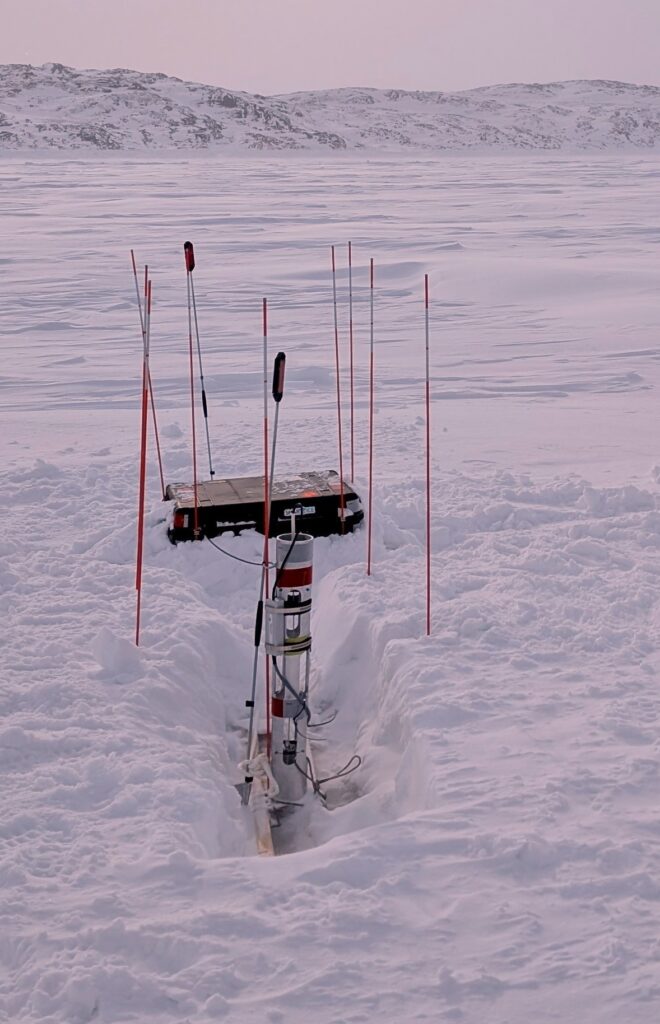
Key field constraints included:
- Operation with heavy gloves and limited dexterity
- Minimal in-field assembly
- Transport by skidoo over sea ice
- Deployment through constrained boreholes
Analytical design was validated through physical experimentation, including scale models, component stress testing, and deliberate misuse scenarios reflecting real field behavior. Human behavior, environmental constraint, and logistics were treated as design requirements, not afterthoughts.
Outcome
Through successive design cycles and testing seasons, SmartICE has progressed toward a Version 5 configuration. While full Arctic validation remains pending, the emerging design reflects substantial improvements relative to Version 4.
Emerging outcomes (v4 → v5) include:
- Part count reduced by more than half
- Significant reductions in material and labour cost
- Leakage risk eliminated through architectural redesign
- Improved robustness and field survivability
By reframing the work from solving discrete field failures to a holistic review of the device’s core purpose and operating constraints, the dominant failure mechanism was designed out by eliminating nearly all components capable of leaking.
Leadership mentoring
In parallel with technical delivery, Design Smith mentored SmartICE’s engineering lead to strengthen leadership capacity alongside execution. Focus areas included workshop organization and workflow, scheduling and delivery discipline, technical decision frameworks, and team motivation—supporting the transition from capable individual contributor to effective technical leader.