Overview
In the early era of microfluidic DNA analysis, Xeotron sought to automate a complex benchtop hybridization protocol involving precise timing, micro-volume fluid sequences, and temperature-controlled reactions. No commercial equipment could meet their needs. As a senior engineer at Medical Murray Inc., Andrew led the transformation of Xeotron’s scientific workflow into a fully integrated benchtop instrument that enabled their research to progress, scale, and ultimately support further internal development.
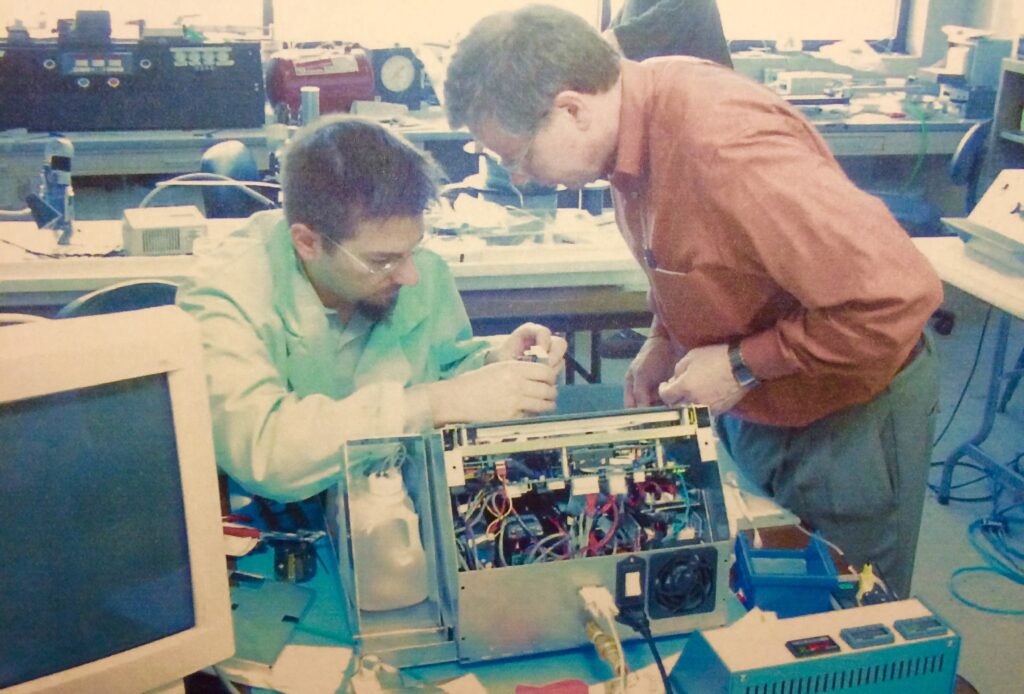
Translating a Research Concept
into a Working System
From Slide-Up Design Requirements
Xeotron supplied the chemistry, timing, temperature profiles, and scientific constraints—but the mechanical and system architecture needed to be built from the ground up. The biochip itself dictated the geometry and constraints of the entire device. From this foundation, Andrew designed a platform capable of controlling flow paths, pressures, thermal cycles, sealing forces, and orientation—without compromising the fragile micro-channel structure.
As a senior engineer at Medical Murray, he was responsible for the mechanical architecture, fluidics layout, thermal management system, electrical integration, power distribution, and the incorporation of an industrial all-in-one computer into the industrial design for a short-run production of 10–20 units.
Engineering a Device
That Had Never Existed
System Architecture Decisions
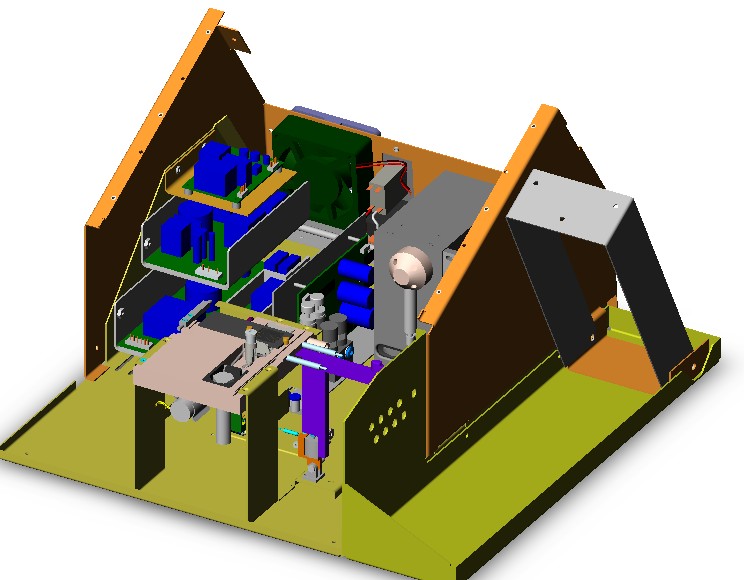
Early design decisions included:
• selecting pumps capable of micro-volume precision
• designing fluid paths that minimized dead volume
• ensuring each chemical step could be isolated and reverse-flushed
• choosing materials compatible with DNA chemistry and aggressive reagents
• determining the controlled heating and cooling method for the slide alone, without heating the surrounding structure
Managing Extreme Spatial Constraints
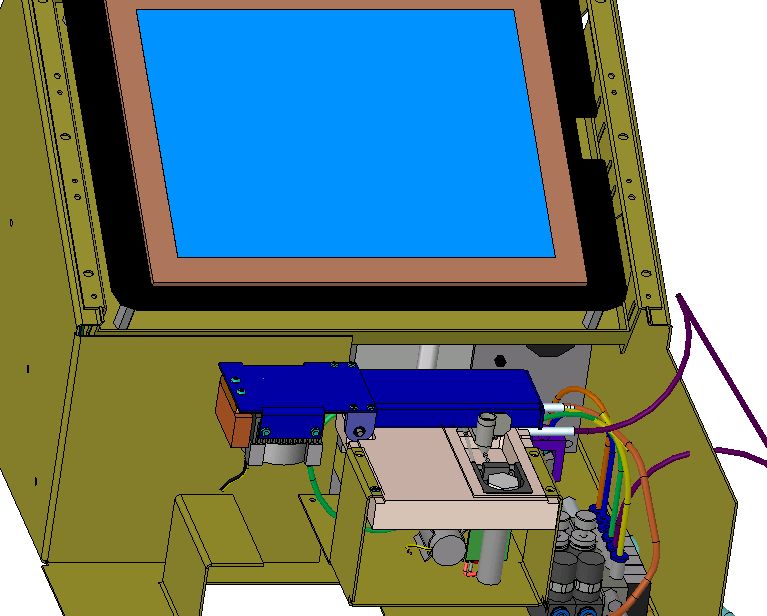
The internal volume had to accommodate pumps, valves, reservoirs, power components, thermal hardware, control electronics, and the industrial all-in-one computer—each with specific spatial and thermal demands. The resulting packaging challenge required iterative tuning of panel geometry, subsystem mounting, and wiring/tubing routing to fit “ten pounds of technology into a five-pound box.”
Prototyping and Vendor Coordination
The design effort required close collaboration with sheet-metal fabricators, machinists, casting vendors, and sealing-material specialists. SLA (Stereolithography) 3D prints were essential for rapid iteration and pressure-tested fit verification during early prototype phases. These physical models allowed Andrew to validate assumptions around tolerances and subsystem interference before committing to machined parts.
Solving the Slide-Loading Challenge
Precision Heat Transfer and Sealing
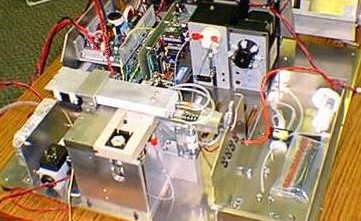
The slide demanded perfect planar contact for thermal transfer, tightly controlled sealing pressure, and zero post-insertion adjustment. Its performance depended on strict horizontal alignment for drainage and chemical contact.
Andrew developed a pivoting thermal assembly incorporating a Peltier junction, heat sink, and heat pipe. A tuned spring system created the exact sealing pressure needed, while a positive solenoid lock ensured consistent engagement. Precision-machined PEEK components were used to control alignment, orientation, and mechanical stability around the sensitive micro-channel slide.
Controls, Power, and Industrial Design
Electrical and Power Distribution Complexity
The instrument required multiple voltage domains to run pumps, valves, sensors, motors, thermal components, and the embedded computer. Each subsystem demanded its own wiring pathway, grounding strategy, and mounting solution.
Industrial Design Constraints
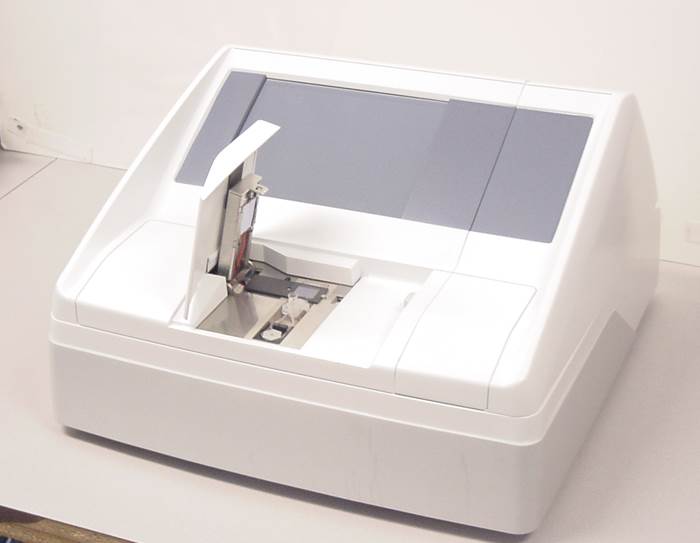
Because Xeotron’s workflow was evolving, the industrial all-in-one computer had to be incorporated in a way that supported future flexibility without penalizing manufacturability. The unit added heat and spatial constraints, requiring careful planning of air flow, access, and maintenance. The final enclosure balanced engineering functionality with a professional, laboratory-ready appearance.
From CAD to Reality
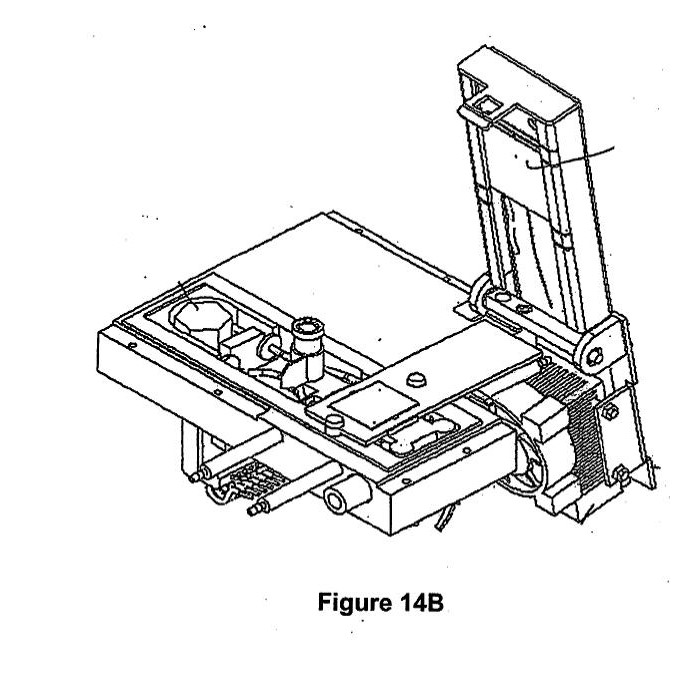
At the time of this project, CAD tools had limited capability for routing flexible elements such as tubing and wiring, making real-world modeling essential. Transitioning from CAD to physical builds required substantial iteration and early part acquisition. Tubes, wires, and fasteners behaved differently outside the virtual environment, and hands-on adjustments were needed to ensure everything aligned within the extremely tight internal envelope.
Repeated prototyping, refitting, and cross-team communication ensured the final configuration was compact, serviceable, and robust.
Outcome
Ten fully functional hybridization stations were built, tested, and delivered. The system became Xeotron’s beta platform, enabling automated workflows that had previously existed only as manual benchtop procedures. It supported ongoing research, informed the development of Xeotron’s next-generation internal instruments, and contributed to their evolving intellectual property.
Lessons That Carried Forward
This project reinforced several enduring principles in complex device development:
• multidisciplinary coordination across mechanical, electrical, fluidic, and thermal domains is essential
• early workflow clarity is critical when scientific protocols are evolving
• physical prototyping reveals constraints that CAD cannot
• material and vendor collaboration (especially on tight toleranced dimensions and parts subject to mechanical and thermal load) can make or break delicate interfaces
• early scenario planning helps prevent late-stage roadblocks
• collaboration with subject-matter experts—from chemistry to programming to industrial design—is invaluable
These lessons have influenced many subsequent projects and form part of the basis of design that Design Smith applies today.